Website design project
James Woodman
Music Composer website, Cambridge MA
Project overview
Design screenshots
Project details
Project Goals and Requirements
James had decades of compositions, commissions, performances, reviews, and publishing information documented in a lengthy catalogue. While the information was comprehensive, maintaining it separately as a traditional print document made updates difficult and prevented the content from being fully searchable or reusable online.
The website needed to preserve the scholarly depth of his records while making them practical for people searching for music. Visitors needed to quickly determine whether a composition was appropriate for their instrument, ensemble, occasion, or technical ability. James also needed a manageable way to publish updates without entering the same information in multiple places.
My Approach
A Structured Music Catalogue
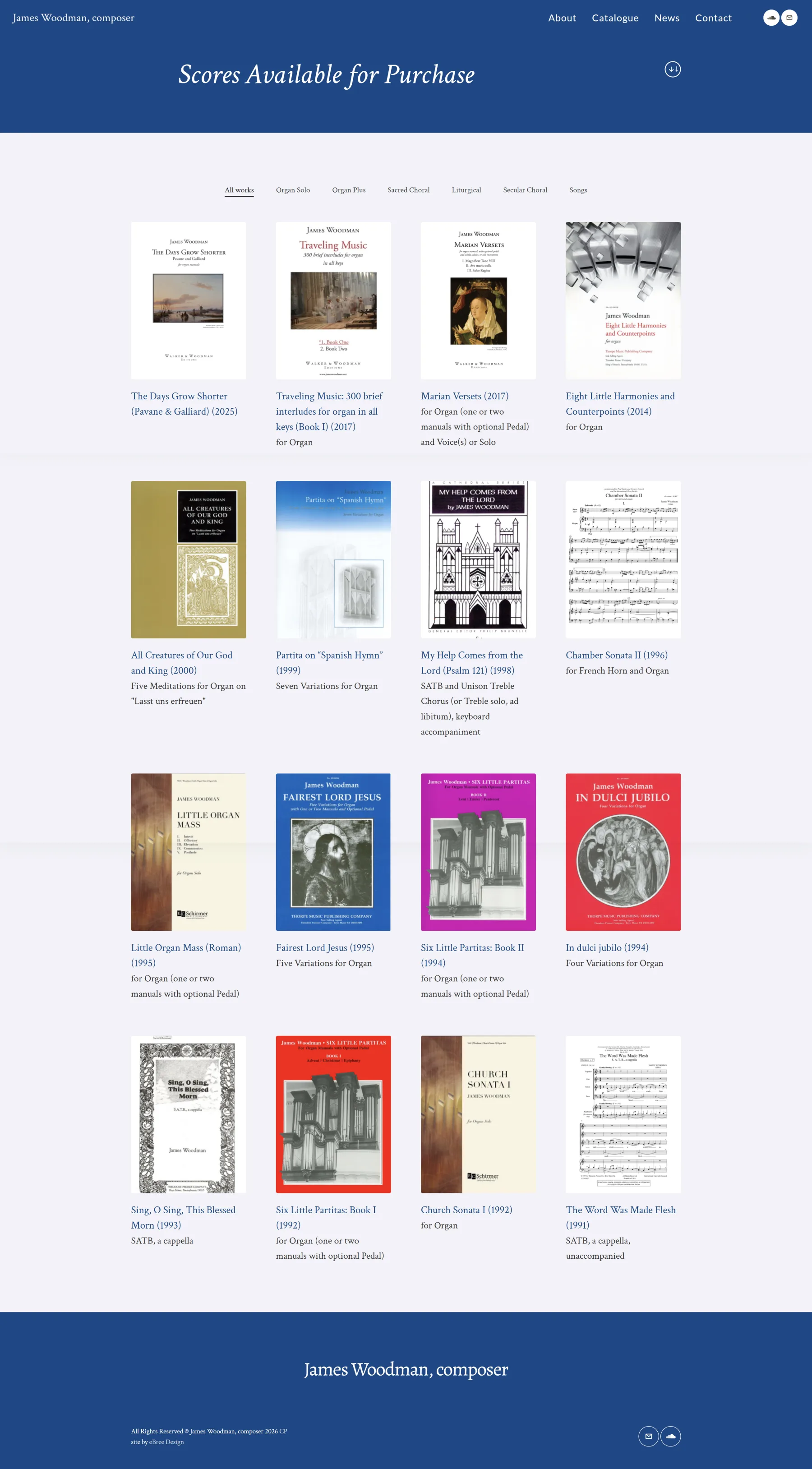
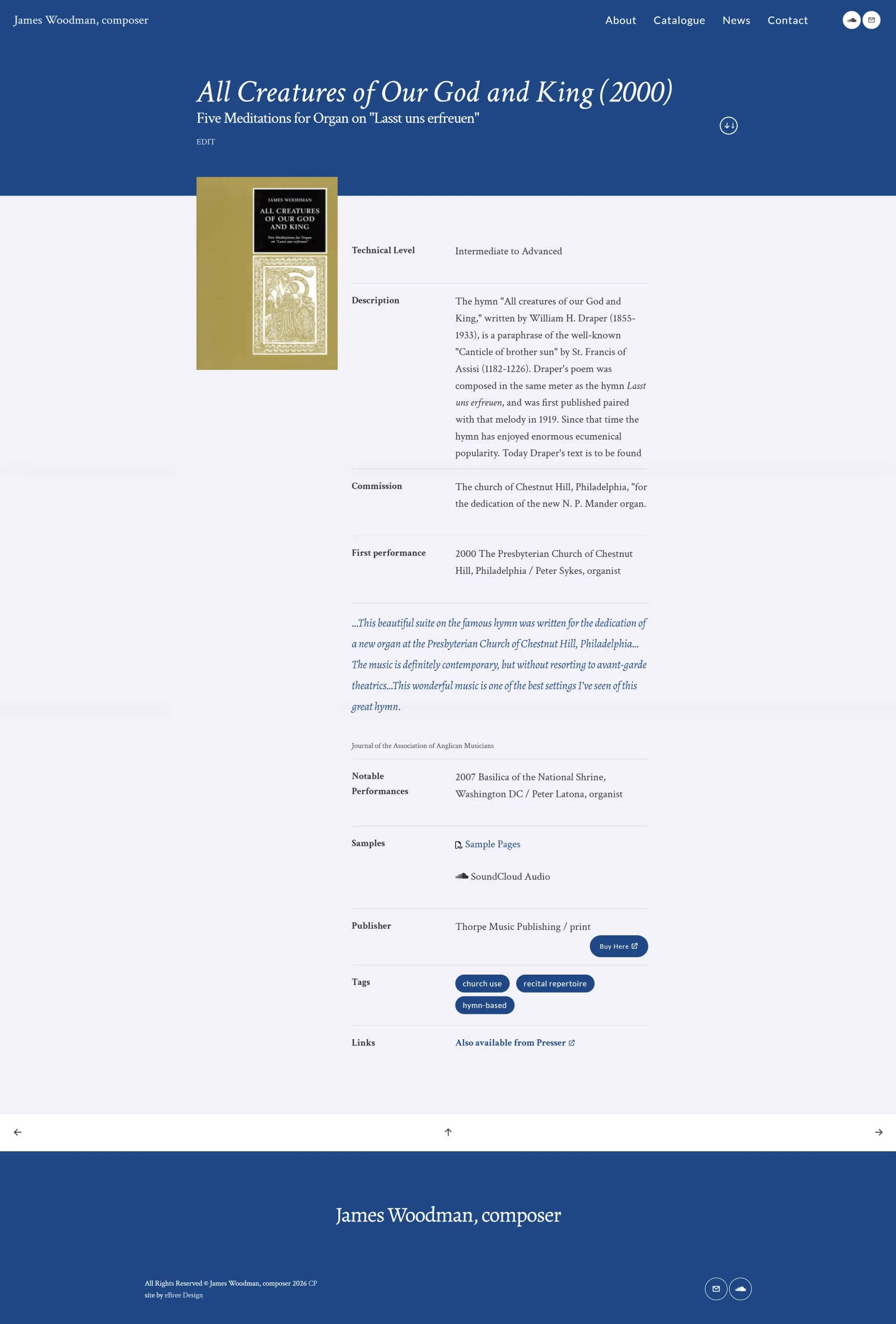
I designed a database-driven catalogue in which every score has its own detailed record. Custom fields organize information such as instrumentation, duration, technical level, publisher, dedication, commissions, first performances, notable performances, reviews, and descriptive notes.
Visitors can browse by musical category, filter works by technical level, and use tags to discover additional compositions with similar characteristics.
Detailed Score Previews
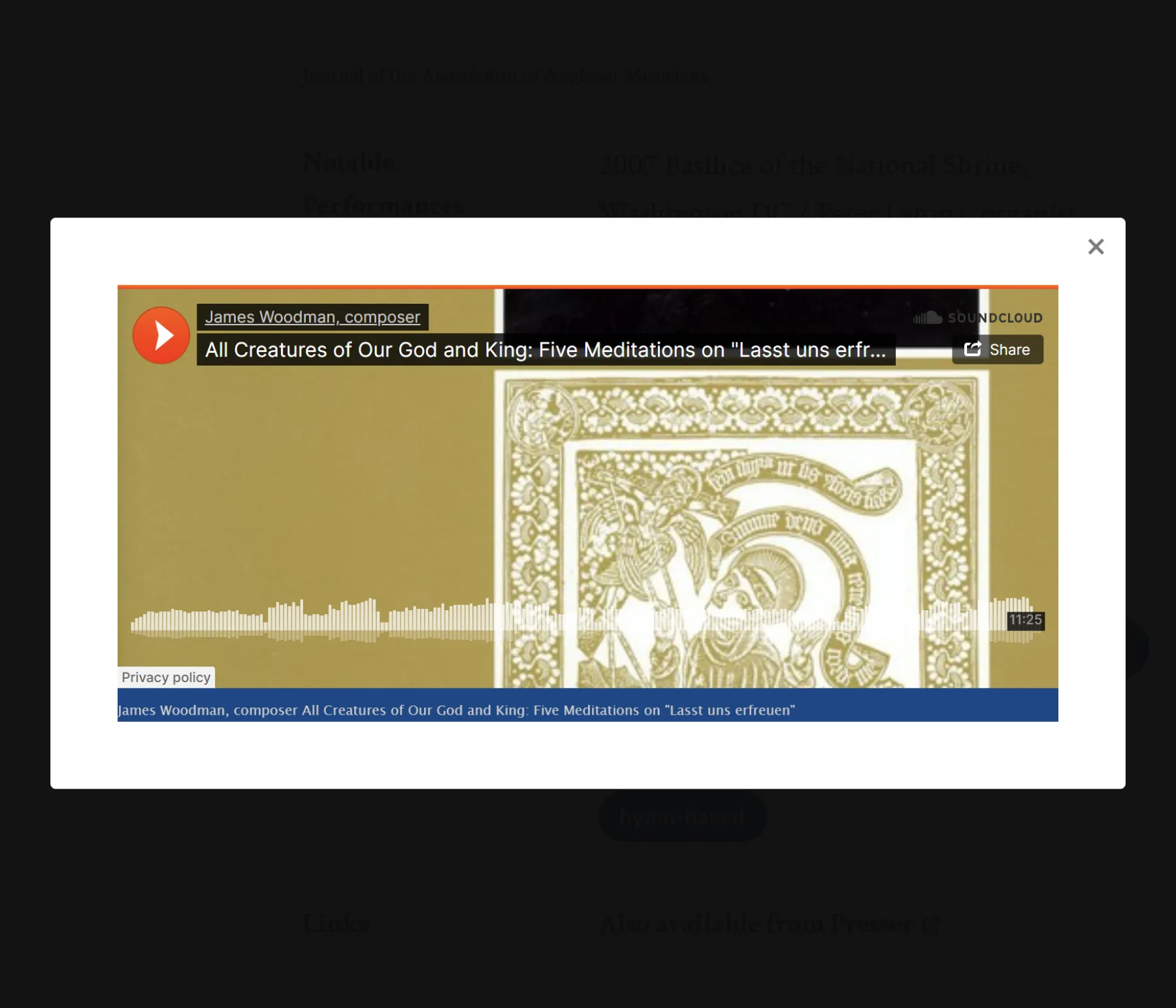
Individual score pages provide the information musicians need before choosing a piece. Depending on what is available, each page can include downloadable sample pages, embedded SoundCloud recordings, reviews, performance history, and publisher information.
Flexible purchase fields allow James to direct visitors to any outside publisher or retailer rather than being tied to a single e-commerce platform.
Connected News and Catalogue Content
News articles can be related directly to individual compositions. When James publishes information about a performance, recording, review, or other development, that update can automatically appear on the corresponding score page.
This relationship-based structure keeps the catalogue current while allowing the same content to be used throughout the website without duplication.
A Dynamic Print Catalogue
I replaced the separately maintained print document with a print-ready version generated directly from the website’s catalogue database.
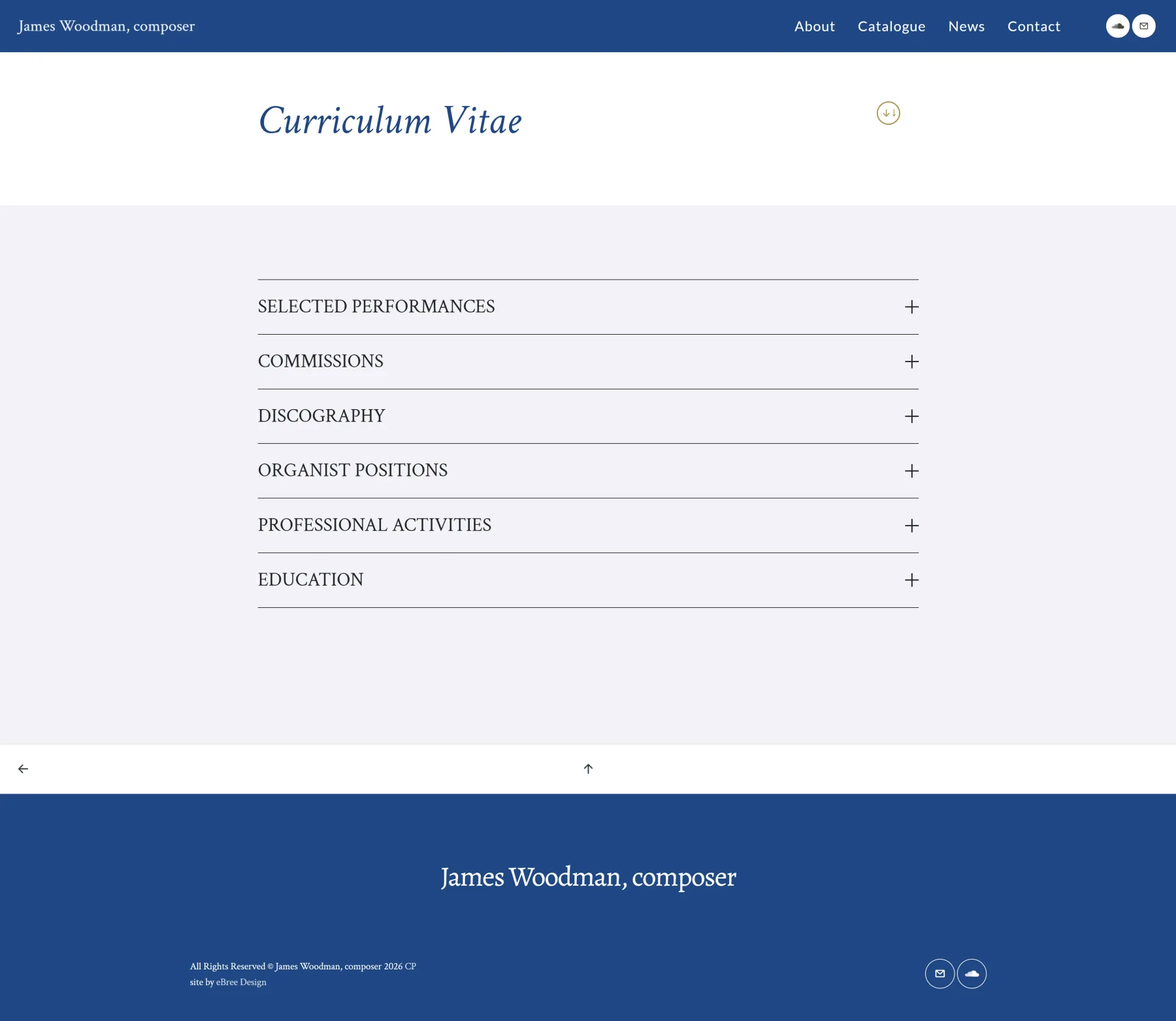
Custom print styles remove the navigation, header, footer, and other screen-only elements, reorganizing the catalogue as a clean document suitable for printing or saving as a PDF. James can now update a composition once and have the change reflected in both the online and printable catalogues.
Accessible, Keyboard-Navigable Design
The website is designed to be fully navigable by keyboard, allowing visitors to explore the catalogue, filters, menus, links, and interactive content without relying on a mouse. Accessibility was considered throughout the responsive front-end design so the extensive content remains clear and usable across devices and methods of navigation.
Guided Homepage Discovery
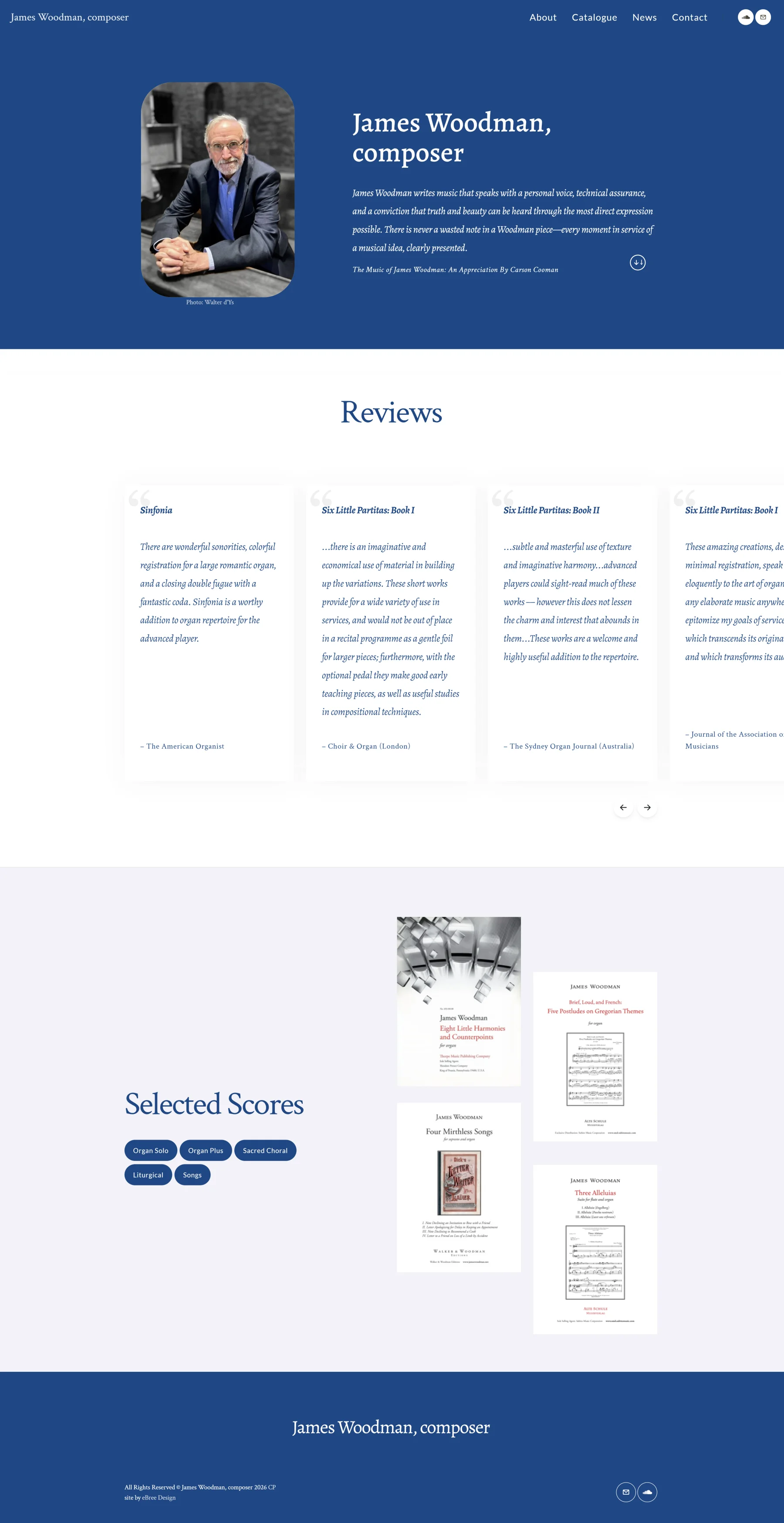
The homepage introduces James and his work through selected scores, reviews and testimonials, and prominent musical tags. These entry points help visitors move directly toward popular categories and compositions without first navigating the complete catalogue.
What I Custom Built
- Website strategy and information architecture
- Custom content-management system development
- Music catalogue database planning
- Custom fields for detailed score information
- Catalogue filtering and category browsing
- Tag-based content discovery
- Technical-level classification
- Downloadable PDF score samples
- SoundCloud audio integration
- Flexible third-party purchase links
- Related news and score relationships
- Dynamic print catalogue and custom print styles
- Homepage featured-score displays
- Reviews and testimonials
- Responsive front-end development
- Accessible, keyboard-navigable interactions